

Things to Do in Santorini
Oia at Sunset - Go Early or Miss the Point
⏱️ 9 min read
Planning your Santorini itinerary? Start with our complete Santorini destination guide for an overview of the island's villages, beaches, and logistics.
Oia is the village at the northern tip of the caldera that everyone comes to Santorini to photograph. The sunset from the castle ruins is genuinely one of the most beautiful in the world, and genuinely one of the most crowded. Most visitors arrive at 6pm and stand shoulder to shoulder on the walls. Arrive at 4pm instead. Walk the caldera path from Fira, spend an hour exploring the lanes before the crowds descend, and you will be in position when the light starts to change. The difference between arriving early and arriving late is the difference between an experience and a queue.
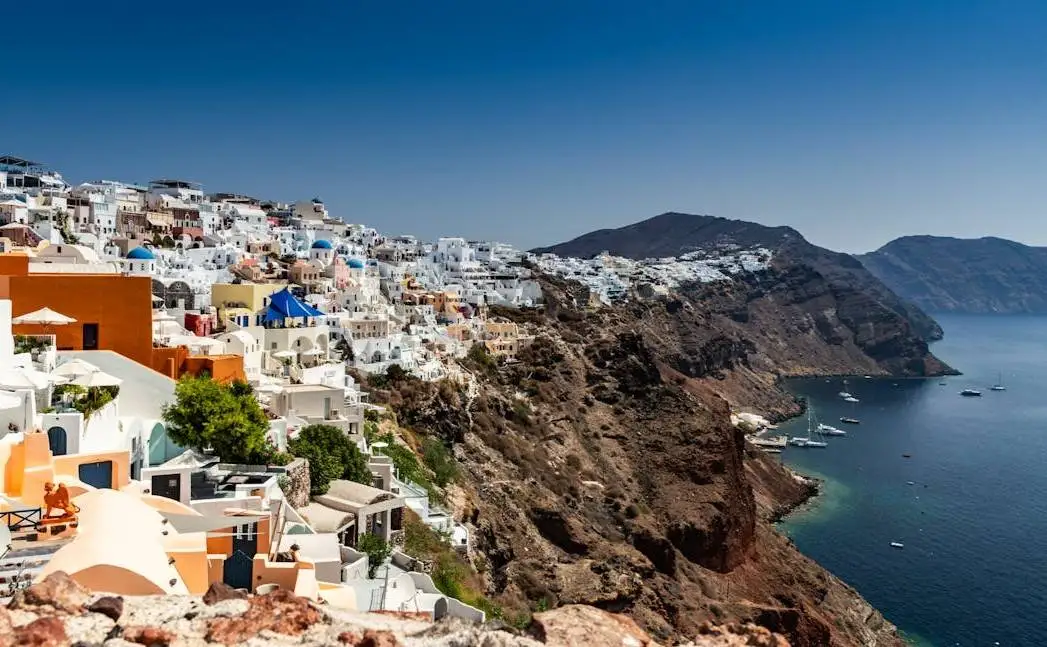
The village itself rewards the morning even more than the evening. Before 9am, the lanes are empty, the whitewashed walls catch the early light, and the cafés that have been here for decades are open and unhurried. This is the Oia that exists before the day-trippers arrive by bus from the port.
Akrotiri - The Pompeii of the Aegean That Nobody Talks About
On the southern tip of the island, buried under volcanic ash for 3,500 years and excavated only in the 1960s, Akrotiri is one of the most significant Bronze Age sites in the world. An entire Minoan city, streets, houses, frescoes, storage jars, preserved almost perfectly by the eruption that destroyed it. Unlike Pompeii, there are no human remains: the inhabitants appear to have evacuated before the volcano. The site is fully roofed and walkable, and the quality of what survived is extraordinary.
Most visitors to Santorini never go. The combination of Oia, the beaches, and the wine tastings fills the day and Akrotiri gets left off the list. This is a mistake. Give it two hours in the morning before the heat builds, and pair it with the nearby Red Beach, one of the most dramatic coastal landscapes in Greece, a ten-minute walk from the site entrance.
Our Akrotiri and wine shore excursion combines the archaeological site with a visit to one of the island's oldest wineries, the logical pairing, since the Minoans were among the first people in the world to produce wine at scale.
Akrotiri Archaeological Site & Wine Tasting Tour
The Bronze Age city that Santorini's volcanic eruption buried and preserved, paired with a tasting at one of the island's oldest wineries. The combination most visitors miss entirely.
The Wine - Santorini Produces Something Genuinely Unusual
Santorini's volcanic soil produces Assyrtiko, a white grape variety that grows nowhere else in the world with quite the same character. Dry, mineral, high in acidity, with a salinity that comes directly from the island's geology. The vines are trained into low basket shapes called kouloura to protect them from the meltemi wind, and some of the rootstock is over a century old, among the oldest ungrafted vines in Europe, having survived the phylloxera blight that destroyed most of the continent's vineyards in the 19th century.
Vinsanto, the island's sweet wine made from sun-dried Assyrtiko and Aidani grapes, is what the serious wine drinkers come for. It is produced in small quantities, aged in oak for years, and almost impossible to find outside Greece at the quality level the best producers achieve.
The wineries worth visiting are not the ones with the caldera views and the tour buses outside. They are the smaller estates in Pyrgos, Megalochori, and Episkopi Gonia, inland, quiet, and serious about what they make. Our private Santorini wine tour covers the producers that don't appear on the standard tourist circuit. For a full overview of what we offer on the island, see all our private Santorini tours.
Private Santorini Wine Tour
Assyrtiko and Vinsanto at the estates that actually matter, away from the caldera-view tourist wineries, at the producers who have been making wine on this island for generations.
The Caldera by Boat - The View That Changes Everything
Santorini's caldera, the flooded crater of one of the largest volcanic eruptions in human history, is best understood from the water. From the villages on the rim, you see the caldera as a backdrop. From a boat in the middle of it, you understand what you are actually looking at: a collapsed volcano six kilometres across, with cliffs rising 300 metres on three sides and the open sea to the south where the crater wall once was.
The catamaran cruise at sunset is the experience that most visitors remember longest. The light on the caldera cliffs changes through amber, orange, and deep red as the sun drops, and the village lights of Oia and Fira begin to appear above. Swimming stops at the hot springs near Nea Kameni, where the water is visibly warm and coloured by sulphur, and at a sheltered bay with the clearest water on the island. For more on-water options, see all our Santorini boat tours.

Catamaran Sunset Cruise, Santorini
The caldera from the water at sunset, with swimming stops at the volcanic hot springs and a sheltered bay. The version of Santorini that the postcards are trying to describe.
The Villages - Beyond Oia and Fira
Santorini has eleven villages and most visitors see two of them. The ones worth adding to the itinerary are the ones nobody is rushing to photograph.
Pyrgos is the highest village on the island, built around a Venetian castle with 360-degree views over the caldera, the beaches, and the open Aegean. No cruise ship crowds, no queues. The walk through the lanes takes twenty minutes and the view from the top is better than anything in Oia, because you can see Oia from here, along with everything else.
Megalochori is a working village in the wine-growing interior of the island, with a square, a bell tower, and a handful of kafeneions that have been serving the same coffee since before Santorini became famous. It is ten minutes from Fira and a different world.
Emporio is the island's largest medieval settlement, fortified against the pirates who raided the Cyclades for centuries. The outer walls of the houses formed the defensive perimeter, the doors are narrow, the lanes deliberately confusing, and the whole village is essentially a castle that people still live in. Most visitors drive straight through it on the way to Perissa beach without stopping.
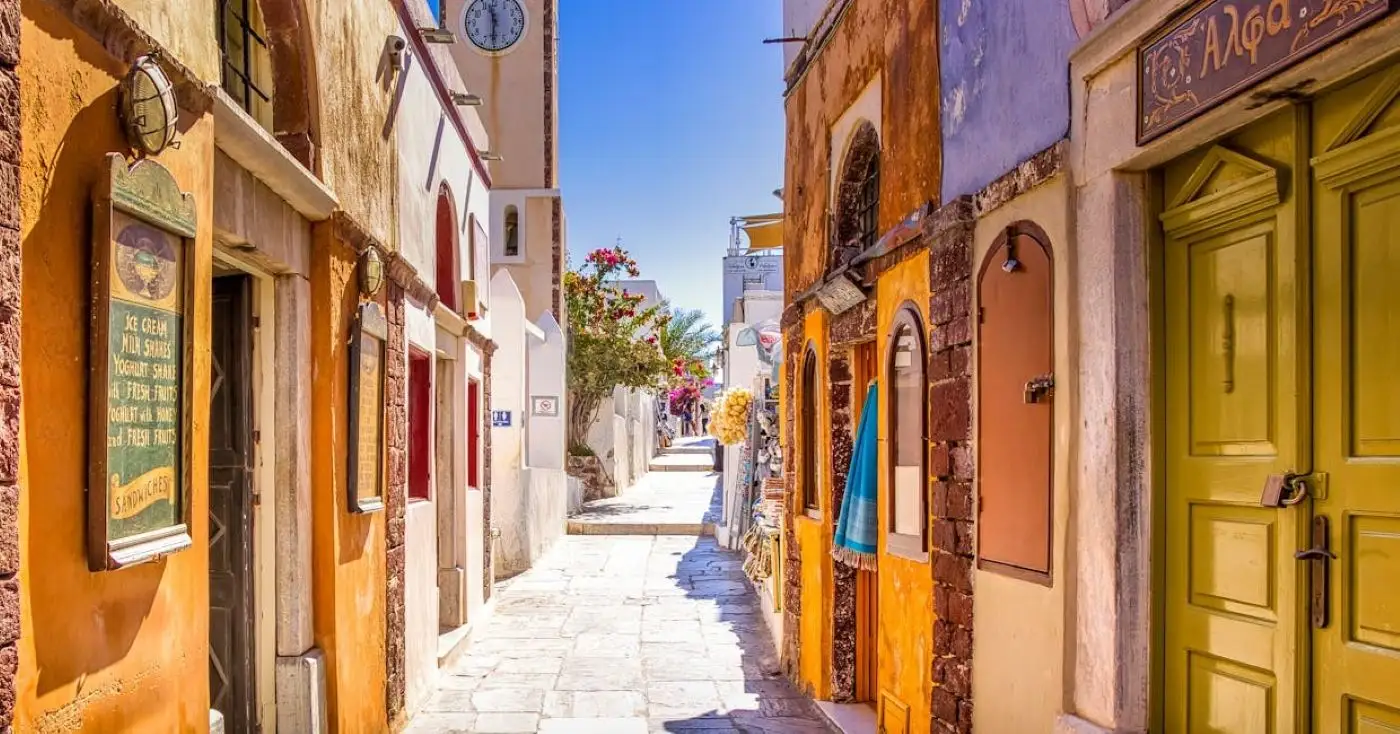
The Beaches - What the Brochures Don't Tell You
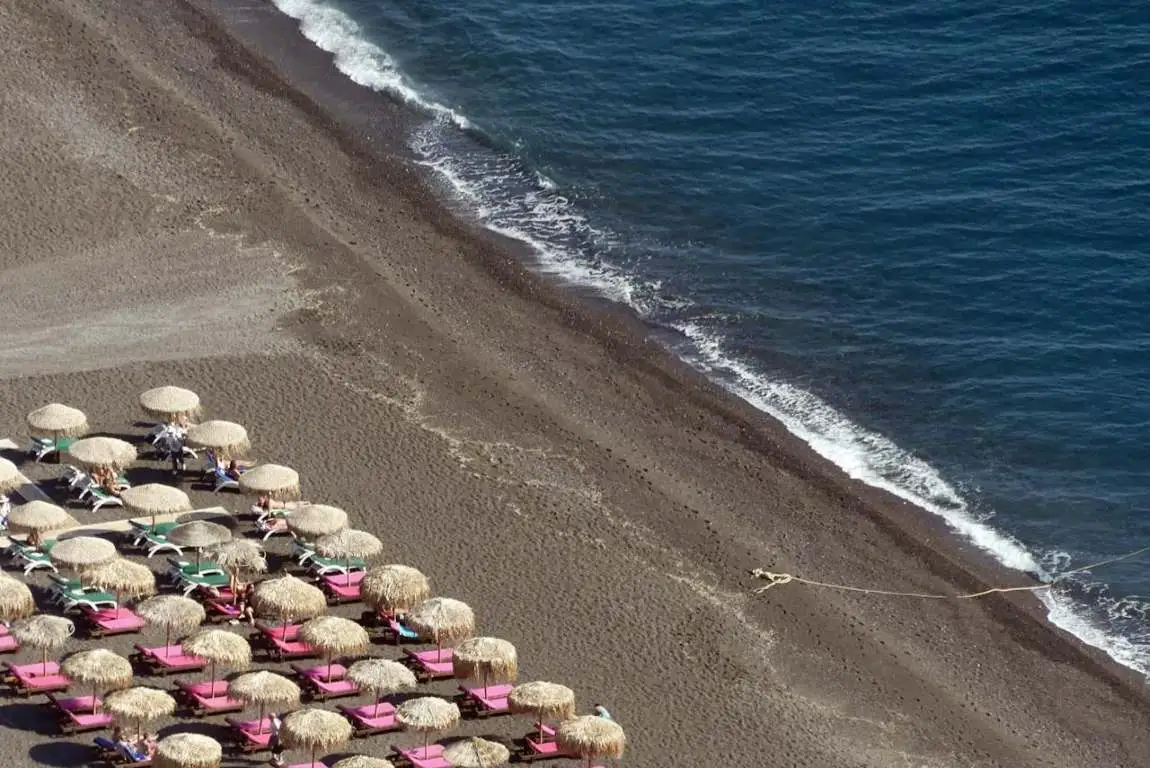
Santorini's beaches are volcanic, black sand, red sand, and in some places white pumice, and they are genuinely unlike anywhere else in Greece. They are also not the island's strongest feature, and it is worth being honest about that before you plan your day around them.
Perissa and Perivolos are the black sand beaches on the southeastern coast. Long, organised, and lively, good for a full beach day, with proper restaurants and sunbeds. The water is clean and the sand heats up fast in summer, so bring footwear.
Red Beach is dramatic to look at, volcanic red cliffs dropping to a small bay, and worth the walk from Akrotiri. It is not the beach for a long swim but it is the most photographed on the island for good reason.
Vlychada is the beach that serious visitors know about and casual visitors miss. White pumice cliffs eroded into strange formations, a working fishing harbour, and almost no one on a weekday morning. The taverna at the harbour serves whatever the boats brought in that morning.
Arriving by Cruise Ship - How to Use the Time Well
Santorini is one of the busiest cruise ports in the Mediterranean, and the logistics matter more here than almost anywhere else. Ships anchor in the caldera and tender passengers ashore at Skala, the old port at the base of the cliff. From there, you either take the cable car up to Fira (queue), ride a donkey up the zigzag path (slow), or arrange a transfer in advance (sensible).
The cable car is where the day goes wrong for most cruise passengers. When three or four ships are anchored in the caldera simultaneously, which happens regularly in July and August, the queue for the cable car back down to the tender point can reach two to three hours. In full summer sun. With a departure time that does not move. This is not an exaggeration: it is the single most stressful logistics problem on the island, and it catches experienced travellers off guard every season. The solution is simple: a private vehicle and driver who knows exactly when to leave each location, takes you down via the road to Athinios port instead of the cable car, and gets you to the tender point with time to spare.
For passengers who want to skip the cable car queue entirely, we work with a private tender service that transfers you directly from the base of the cliff to Athinios port by sea, no queue, no donkeys, no stress. Ask us about this when you book.
The island fills up fast on days when multiple ships are in. Oia becomes impassable by midday. Akrotiri, the wine country, and the southern villages stay manageable. A private vehicle and driver means you go where the crowds aren't, see what you came to see, and get back on time.
Our Santorini shore excursions are built around the ship schedule, we know the tender times, we know the traffic, and we have never missed a departure.
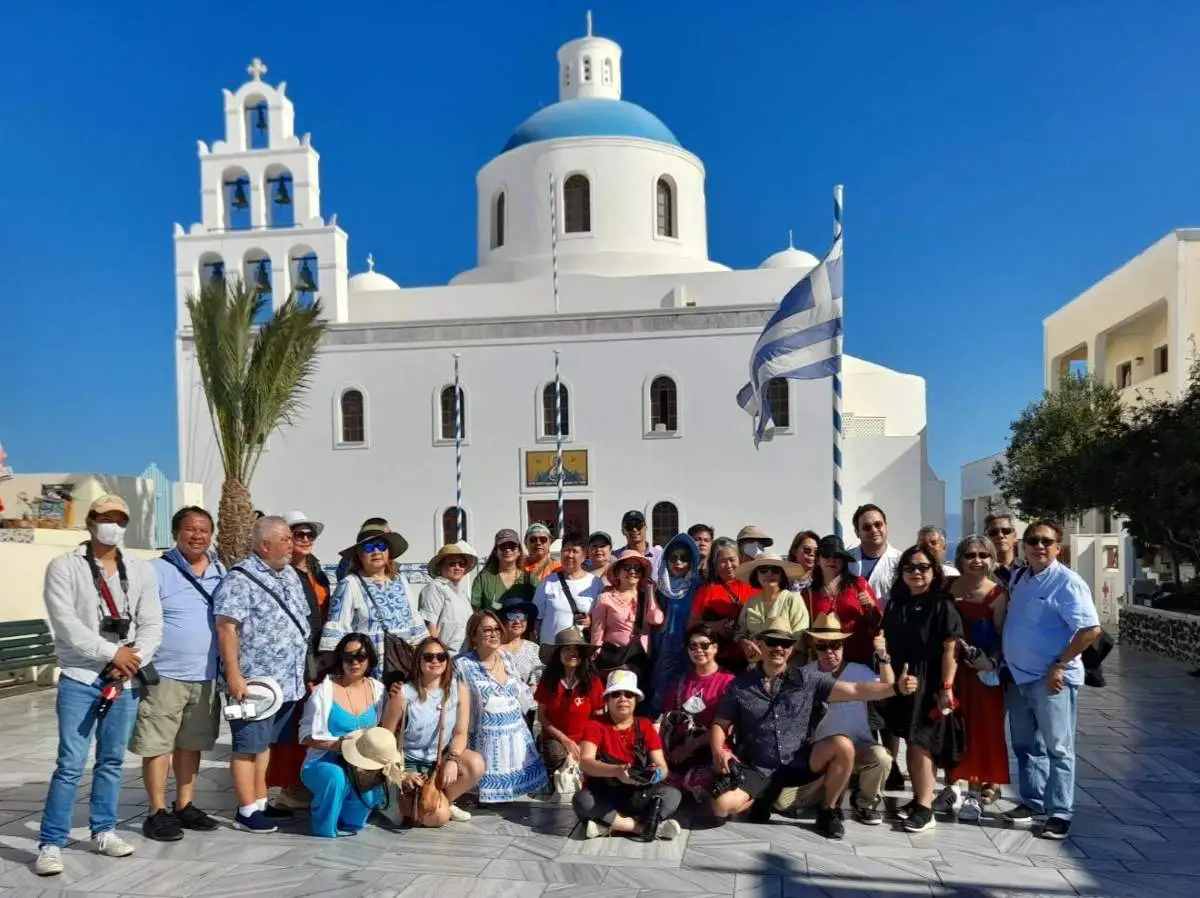
Private Santorini Shore Excursions
From the tender point to Oia, Akrotiri, the wineries, and back, timed precisely around your ship's schedule. Private vehicle, local driver, no queues, no missed sailings.
Frequently Asked Questions - Things to Do in Santorini
How many days do you need in Santorini?
Three days covers the essentials comfortably: Oia and the caldera, Akrotiri and a winery, and a boat trip. Two days is possible but rushed. Four days gives you time to slow down, find the villages nobody is photographing, and eat somewhere that isn't on TripAdvisor's top ten list.
When is the best time to visit Santorini?
May, June, and September. The weather is warm, the sea is swimmable, and the island has not yet reached the compression of July and August, when Oia at sunset can hold upwards of 3,000 people in a space designed for a few hundred. October is still good for the wine and the archaeology; the boat tours thin out but the caldera is at its most atmospheric.
Is the Santorini sunset overrated?
The sunset itself is not overrated, it is genuinely one of the best in the world. The experience of watching it from the Oia castle walls in August, surrounded by several thousand other people, is. The solution is timing: arrive early, or watch from Imerovigli on the caldera path, or from the water on a catamaran. Same sunset, entirely different experience.
Is Santorini good for families?
Yes, with some caveats. The caldera villages are built on cliff edges with steep drops and no guardrails, fine for older children, stressful with toddlers. The beaches are more manageable. Akrotiri genuinely engages older kids. A private vehicle makes the island significantly easier with children than relying on the crowded public buses.
What is the most underrated thing to do in Santorini?
Akrotiri, without question. A Bronze Age city preserved by volcanic ash for 3,500 years, excavated to a standard that puts most ancient sites in Europe to shame, and visited by a fraction of the people who queue for the Oia sunset on the same day. It takes two hours, costs very little, and changes how you understand the island entirely.
This guide is for you if:
- You want the Santorini sunset without standing in a crowd of 3,000 people
- You are interested in what the island was before the infinity pools and the Instagram accounts
- You want to drink serious wine, not tourist wine
- You arrived by cruise ship and have one day to use well
- You want to see Akrotiri and actually understand what you are looking at
- You are travelling with family and need someone to handle the logistics
- You prefer the village that locals actually live in over the one on the postcard
If any of these sound familiar, you are in the right place.
Ready to See the Real Santorini?
Tell us your dates or your ship's schedule and we will put together a private itinerary around what you actually want to see, not what everyone else does.
Plan My Santorini VisitPowered by  InternetMarketing.gr